


What Work Ethic Really Means at Soccer Tryouts


CRFC BLOGS
LATEST BLOGS & NEWSLETTERS
What Work Ethic Really Means at Soccer Tryouts
If you are a parent heading into tryout season, you have probably heard soccer words tossed around like confetti at a parade. First touch. Vision. Work rate. Decision-making. Sometimes those terms sound clear until you stop and ask, “What do they actually mean for my child in the field?”
That is a fair question. And it matters, because Charlotte Rise FC’s public tryouts page says players are evaluated on touch, vision, and work-rate during free sessions that mirror real academy training for boys and girls U8 to U16. That means these are not side notes. They are part of how coaches look at a player during the tryout process.
The good news is that these qualities are easier to understand than they sound. You do not need a coaching license or a sideline clipboard to spot them. You just need to know what they look like in real soccer moments.
Why These Three Qualities Matter So Much at Tryouts
A tryout is not just about who scores the most goals or who has the fastest sprint. Coaches are trying to figure out which players can function in a real training environment and grow over time. That is one reason Charlotte Rise FC says its tryout sessions mirror real Academy training instead of a one-off showcase format.
When coaches watch players, they are often looking for habits that translate across many sessions:
- How a player receives the ball
- How a player reads the next play
- How a player works when the game gets difficult
Those habits tell a bigger story than one flashy move.
Takeaway: First touch, decision-making, and work ethic help coaches see the player behind the moment. They are useful because they show how a child may fit into a structured soccer environment, not just how they look in one quick highlight.

What First Touch Really Means
First touch is simply what happens when the ball arrives, and a player has to deal with it. That sounds basic, but it can tell coaches a lot in just a few seconds.
A strong first touch usually helps the player:
- control the ball without panic
- Keep the ball close enough to use
- move into the next action
- Stay balanced under pressure
- avoid turning an easy play into a mess
A weak first touch usually creates extra trouble:
- The ball pops too far away
- The player needs extra time to recover
- Pressure closes in fast
- A simple pass becomes a scramble
At tryouts, coaches are not expecting every touch to be perfect. They are looking for whether a player can handle the ball in a way that keeps the game moving.

What parents can look for
- Does your child settle the ball calmly?
- Can they receive the ball and keep playing?
- Do they need multiple touches just to get organized?
- Does the first touch help the next pass, dribble, or turn?
Takeaway: First touch is not about looking fancy. It is about giving yourself a chance to make the next play. A clean first touch often makes the whole game look easier.
What Decision-Making Really Means
Decision-making is what a player chooses to do after they see the situation in front of them. It is not only about soccer IQ in a big-picture sense. It shows up in simple moments all game long.
Examples include:
- pass now or dribble now
- Play safe or force the ball forward
- Press the ball or recover space
- turn into pressure or protect the ball
- move early or wait too long
Charlotte Rise FC’s tryouts page uses the word “vision,” and that connects closely to decision-making. Vision is part of what a player sees. Decision-making is what they do with what they see.
A young player with good decision-making often
- notices teammates early
- avoids forcing low-percentage plays
- chooses simple actions when simple is best
- reacts quickly without rushing
- Looks more composed, even when the pace rises
A player with weaker decision-making may:
- dribble into traffic over and over
- Ignore easy passes,
- freeze when pressure comes,
- make the game harder than it needs to be

What parents can look for
- Does your child spot the easy pass?
- Do they make choices that help the team stay connected?
- Can they adjust when the first idea is not there?
- Do they rush every play or read the moment first?
Takeaway: Decision-making is not about being flashy. It is about solving the problem in front of you. Coaches notice players who make smart, repeatable choices because those players often grow well in team settings.
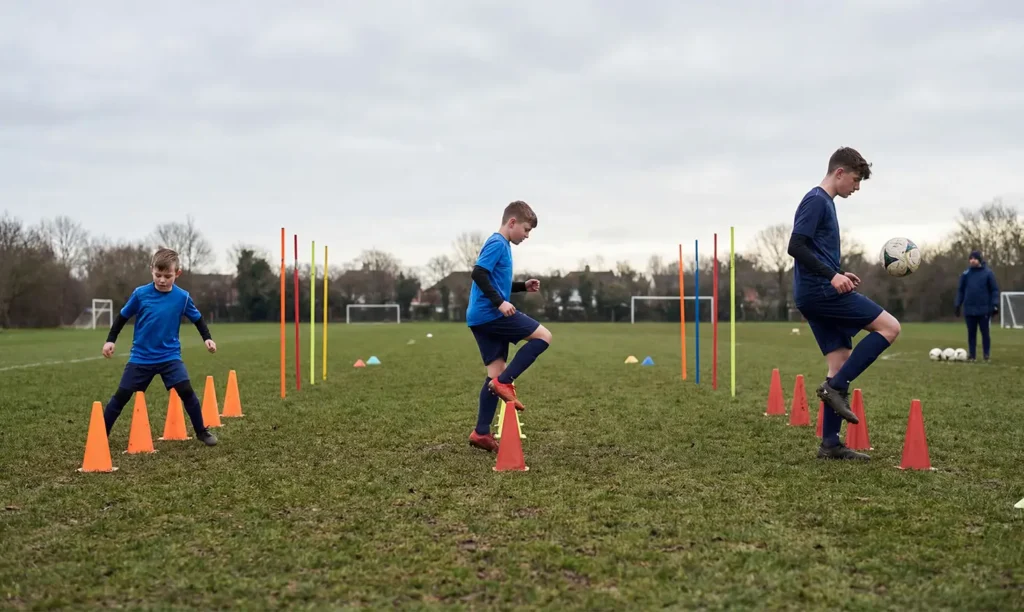
What Work Ethic Really Means
Work ethic is one of those phrases adults love to use, but it can sound vague if nobody explains it. In soccer, work ethic is not just running hard until your legs feel like noodles. It is the quality of your effort from start to finish.
Charlotte Rise FC’s tryouts page uses the phrase work-rate, and that is a strong clue about what coaches value in the evaluation process.
A player with a strong work ethic often:
- keeps moving when the ball is lost
- tracks back after mistakes
- stays involved even when tired
- competes in drills without checking out
- Responds to feedback with effort, not excuses
A player with a weaker work ethic may:
- Stop after one mistake
- jog through recovery moments
- drift out of the session
- works only when the ball is near
- Let frustration change their body language
Work ethic is not always loud. Sometimes it shows up in the little things:
- one more recovery run
- one more press
- One more effort to stay switched on
- One more response after a bad touch
What parents can look for
- Does your child keep competing when things get hard?
- Do they react after losing the ball?
- Do they stay engaged late in the session?
- Does effort stay steady when nobody is cheering?
Takeaway: Work ethic is effort with purpose. Coaches notice players who stay connected, compete honestly, and keep working when the easy option is to fade.
How These Three Qualities Work Together
The strongest players do not always have one standout trait. Often, they show how these qualities connect.
For example:
- A good first touch creates time
- Better time supports better decisions
- A strong work ethic helps a player stay in the play even when the first action is not perfect.
That means one trait often helps the others look better.
Here is how that can play out:
- A player settles the ball cleanly, spots the open teammate, and makes the right pass.
- A player takes a rough touch, but recovers quickly and wins the ball back through effort.
- A player reads pressure early, chooses the simple option, and keeps the team moving.
This is why coaches often value complete habits over one dramatic skill. A player who keeps the game connected can be very useful in a structured team environment.
Takeaway: These traits are not separate boxes. They work like gears in the same machine. When one improves, the others often become easier to show.
Why Coaches Value These Traits at Tryouts
Tryouts are about more than who looks good in one drill. Coaches are trying to project who can train, adapt, and grow inside a real team environment. Charlotte Rise FC’s public tryouts page also says the sessions mirror Academy training, which makes these qualities even more relevant because they show how a player may function beyond one evaluation night.
These traits matter because they help answer bigger questions:
- Can this player handle the pace of training?
- Can this player make useful choices under pressure?
- Can this player stay involved when the game is not going their way?
- Can this player grow across repeated sessions?
That is why a player who is not the flashiest one on the field can still make a strong impression.
Takeaway: Coaches often trust repeatable habits more than occasional highlights. First touch, decision-making, and work ethic help them see which players may hold up over time.
How Parents Can Help Without Overcoaching
This is where many families get tripped up. Parents want to help, so they start handing out a long list of instructions before the tryout. Suddenly, the child is carrying ten ideas into one session and playing like they have a laptop open in their head.
A better approach is to keep it simple.
Before tryouts, focus on:
- calm encouragement
- one or two useful reminders
- effort over perfection
- recovery after mistakes
- staying present in the session
Helpful reminders may sound like:
- “Settle the ball and play simple.”
- “Keep working after mistakes.”
- “Stay involved the whole time.”
That is usually more useful than a long speech about everything that might happen.
Takeaway: The goal is support, not sideline overload. A calm player usually shows more than a crowded mind.
What This Means for Families Heading Into Tryouts
If you are preparing for Charlotte Rise FC tryouts, it helps to know what the public page already says coaches are watching: touch, vision, and work rate. That gives families a cleaner picture of what matters and keeps expectations grounded in the club’s own wording. The page also lists free tryouts for boys and girls U8 to U16, birth years 2018 to 2010, at Ballantyne Ridge High School, with online registration required and a schedule spread across late April and mid-May.
That means the best preparation is not trying to build a superstar in one week. It is helping your child:
- Stay composed on the ball
- make simple, smart choices
- work honestly from start to finish
Those are the habits that travel well.
Takeaway: Tryout preparation should be about clarity, not chaos. When families understand what coaches really mean, the whole process feels less mysterious and more useful.
Conclusion
First touch, decision-making, and work ethic may sound like coaching language, but they point to very real soccer habits. First touch helps a player control the moment. Decision-making helps a player solve the moment. Work ethic helps a player stay in the moment, even when it gets tough.
For families heading into tryouts, that is the bigger picture. Coaches are not only watching for talent. They are watching for habits that hold up in real training. And when you understand what those habits look like, tryout season stops feeling like a guessing game and starts feeling a lot more manageable.
Frequently Asked Questions
How important is the first touch at youth soccer tryouts?
First touch matters because it shapes what a player can do next. A calm, controlled first touch gives a child more time and more options, while a rushed touch can invite pressure right away. That is one reason families heading into Charlotte Rise FC tryouts often hear coaches talk about touch so early in the evaluation process.
What does decision-making look like during a soccer tryout?
Decision-making shows up in simple choices all session long, like when to pass, when to dribble, and when to play the safe option. Young players do not need to be perfect, but they do need to show that they can read the moment and respond in a useful way. Those habits connect closely with long-term youth soccer player development.
What do coaches mean by work ethic at tryouts?
Work ethic usually means a player keeps competing, keeps moving, and keeps responding even when things are not going smoothly. It is not only about running hard. It is also about staying engaged and showing honest effort across the full session. That kind of environment often reflects what parents hope to find in strong Academy Teams.
Can a child still do well at tryouts if one of these areas is weaker?
Yes. Youth players are still developing, so few children are polished in every area. What often helps is showing a willingness to learn and improve during the session. A child who listens, adjusts, and keeps competing can still leave a strong impression, which is one reason the role of a good youth soccer coach matters so much.
How can parents help a child improve these traits before tryouts?
Parents can help most by keeping the message simple. Encourage your child to settle the ball, make smart choices, and keep working after mistakes. That kind of calm support often does more good than a long list of instructions, and it fits well with the bigger picture of how to support your child in soccer.
Why do these qualities matter more than flashy plays?
Flashy plays can grab attention, but repeatable habits usually tell coaches more about how a player may function in real training. First touch, decision-making, and work ethic show whether a child can stay connected to the game over time. That same long-view thinking is a big part of growth mindset building in young players.
Do these traits matter for all age groups at tryouts?
Yes. The way they show up may look different by age, but they still matter across the board. A younger player may show them in simpler moments, while an older player may show them under more pressure. Since Charlotte Rise FC’s current tryout page covers boys and girls from U8 to U16, these qualities remain useful markers throughout the age range.

Did you find this useful?

LATEST BLOGS