


How to Support Your Young Futsal Player at Home

CRFC BLOGS
LATEST BLOGS & NEWSLETTERS
How to Support Your Young Futsal Player at Home
Supporting a young futsal player goes beyond cheering from the sidelines.Children grow faster when parents stay involved at home in simple, meaningful ways. Your support helps shape confidence, mindset, and enjoyment, especially during fast, technical environments like futsal.
This guide offers parent-friendly ideas you can use daily. You’ll learn how to support training at home, encourage healthy mindset habits, and celebrate progress in ways that motivate long-term growth.
Create Simple At-Home Touch Routines
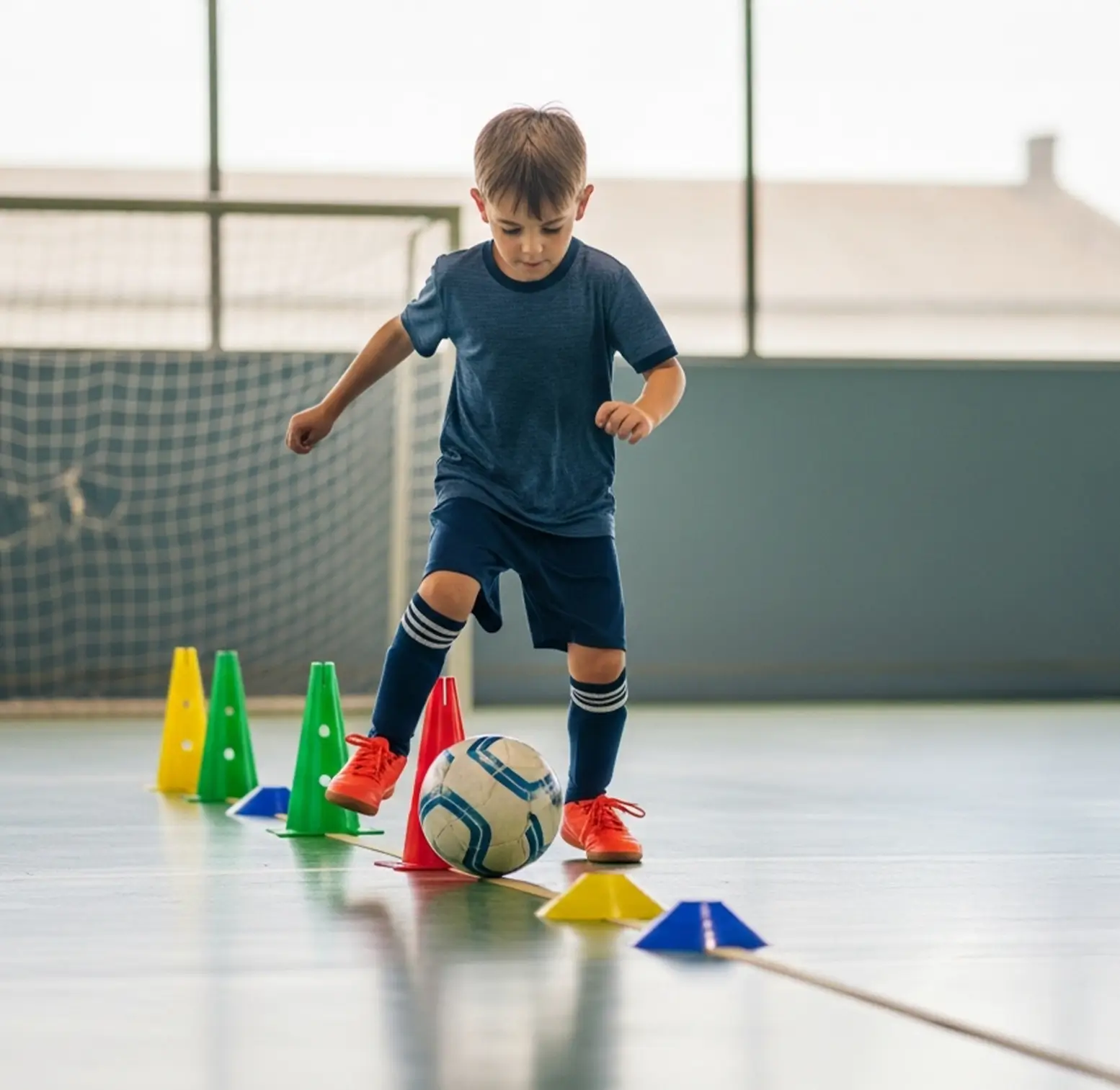
Kids improve faster when they practice small, consistent movements at home. Futsal skills don’t require a large space. A small hallway, garage, or living room can become the perfect mini-training zone.
- Use toe taps, sole rolls, and light dribbling patterns.
- Encourage ten minutes of passing against a wall.
- Build small challenges like quick touches to a target.
- Use cones or household items for short dribbling paths.
- Maintain short sessions so kids stay motivated.
These simple routines help players build confidence. They learn to enjoy practice and feel proud of each small improvement.
Focus on Mindset, Not Just Technique
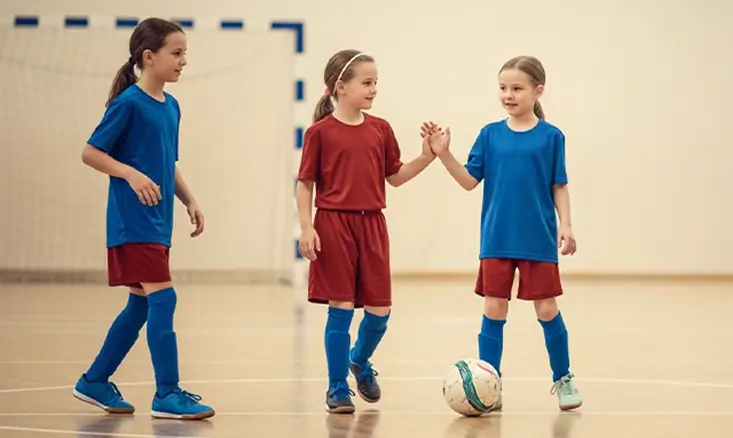
Futsal’s fast pace can feel overwhelming for young players at first. Emotional support matters just as much as skill development.
- Encourage a “try again” attitude after mistakes.
- Praise effort instead of outcomes.
- Talk about what felt fun or challenging.
- Remind them that improvement takes time.
- Keep conversations positive and productive.
Children learn resilience from tone, not technique. Your calm encouragement helps them stay confident even when the game feels difficult.
Celebrate Progress Instead of Wins
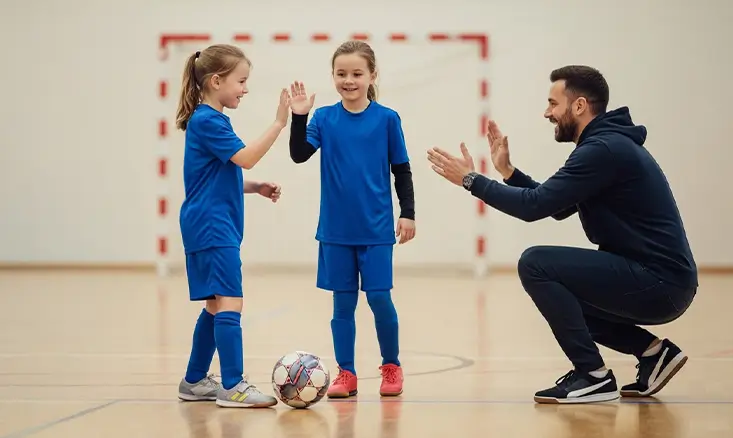
Futsal teaches quick learning, but results can vary from game to game. Celebrate growth instead of performance. Kids thrive when they feel seen for their efforts.
- Celebrate good decisions, not just goals.
- Acknowledge moments of bravery or teamwork.
- Highlight one positive habit after each session.
Celebrating progress teaches kids to enjoy the journey. They learn to value improvement and feel proud of their effort.
Build Communication Habits
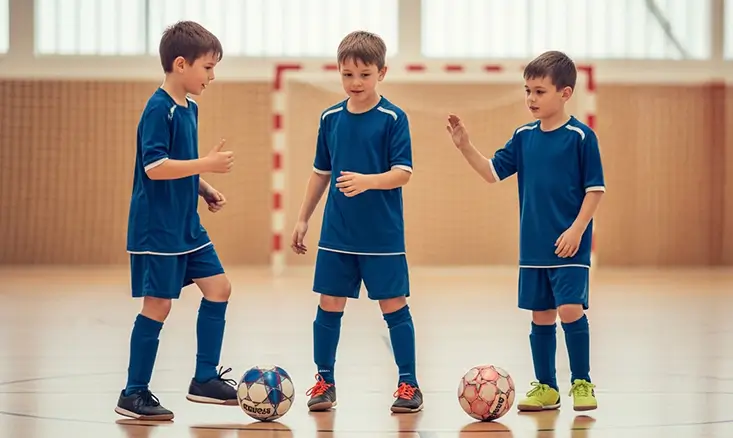
Open communication helps children feel supported and understood both on and off the court.
- Ask open questions instead of giving instructions.
- Ask questions like “What was your favorite moment today?”
- Encourage them to share challenges without fear.
- Observe their skills more than you speak.
- Celebrate emotions as part of learning.
Kids perform better when they feel heard. Your relationship becomes a powerful tool in their growth.
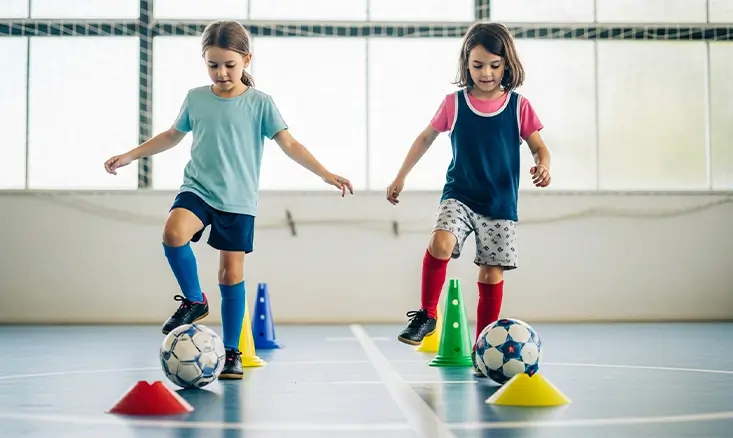
Encourage Healthy Movement Every Day
Young futsal players benefit from daily movement, even on non-training days. Light activity builds coordination, balance, and agility.
- Play quick reaction games like drop-and-catch.
- Encourage backyard tag or small chase games.
- Add simple balance drills like single-leg stances.
- Try mini sprints or quick direction changes.
- Remember always to keep it playful and fun.
Daily movement supports both fitness and confidence. Your child learns to love being active instead of seeing it as training.
FAQs
How much at-home practice should a young futsal player do?
Ten to fifteen minutes a day is enough for most young players. Short, consistent routines help build confidence without creating burnout. This approach supports steady progress similar to what parents see through youth soccer skill development, where repetition and enjoyment matter more than long sessions.
What if my child gets frustrated during futsal?
Frustration is normal in a fast-paced sport like futsal. Parents can help by staying calm, listening, and encouraging effort instead of results. This mindset mirrors the principles of growth mindset development, where challenges are seen as learning opportunities rather than failures.
Do parents need to teach technique at home?
No. Parents should focus on encouragement and simple activities, not technical instruction. Coaches handle technique during sessions. At home, support confidence and enjoyment. This balance aligns with the guidance shared in how to support your child in soccer, where positive involvement helps kids grow faster.
How can I help my child build confidence in futsal?
Confidence grows when kids feel supported and celebrated for effort. Praise small improvements and brave attempts. This approach matches the confidence-building principles found in confidence-building through soccer, where belief develops through encouragement and consistency.
Should my child stay active on non-training days?
Yes. Light activity helps maintain coordination and balance without adding pressure. Fun movement supports long-term growth. This daily approach fits well with the ideas in youth soccer conditioning drills, which emphasize playful movement over intense workouts for young athletes.
How do I know if my child is making progress in futsal?
Progress often shows in confidence, decision-making, and enjoyment, not just goals. Parents can notice smoother movement and stronger focus over time. Many families track this growth through measuring a child’s soccer development, which highlights steady improvement across seasons.

Did you find this useful?

LATEST BLOGS