


Top 5 Futsal Drills Every Soccer Player Should Learn

CRFC BLOGS
LATEST BLOGS & NEWSLETTERS
Top 5 Futsal Drills Every Soccer Player Should Learn
Futsal gives young players the perfect environment to grow quickly. The smaller court, fast pace, and tight spaces help kids react faster and play with better control. Parents often ask which drills matter most for footwork, passing, and confidence, especially during winter or off-season training.
This guide breaks down the top five futsal drills every soccer player should know. These drills are simple, practical, and easy to practice at home or during sessions. Each drill builds real game habits your child will use every time they step onto the field.
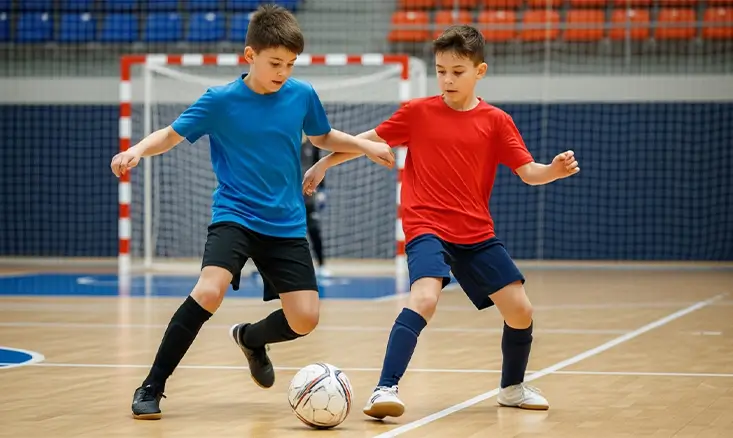
1. Small-Side Passing Boxes for Quick Combinations
Small passing grids help players build fast, clean combinations under pressure. This drill teaches players to pass early, move with purpose, and keep the ball under pressure.
- Set up a small square and pass around the grid.
- Encourage one-touch or two-touch patterns.
- Add give-and-go combinations.
- Focus on inside-foot accuracy.
- Increase speed as confidence grows.
Why it matters:
Players learn to stay calm in crowded areas, react quicker, and combine with teammates smoothly—skills that directly impact game performance.
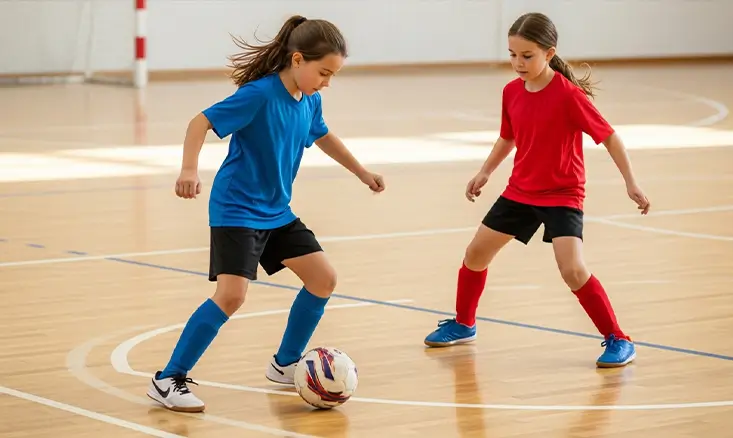
2. 1v1 Tight-Space Control for Better Ball Mastery
Futsal creates constant 1v1 moments. This drill teaches kids how to stay composed when pressure arrives and how to solve problems with the ball at their feet.
- Use a small grid and take turns attacking or defending.
- Encourage close dribbling with both feet.
- Use the sole to change direction.
- Keep the body between the ball and the defender.
- Focus on quick reactions after each move.
Why it matters:
Kids learn to stay calm with defenders closing in. This makes them stronger in outdoor games where they suddenly feel more space and time.
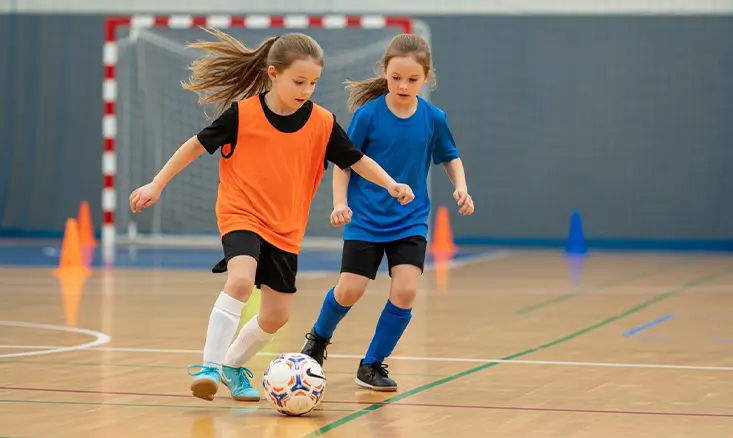
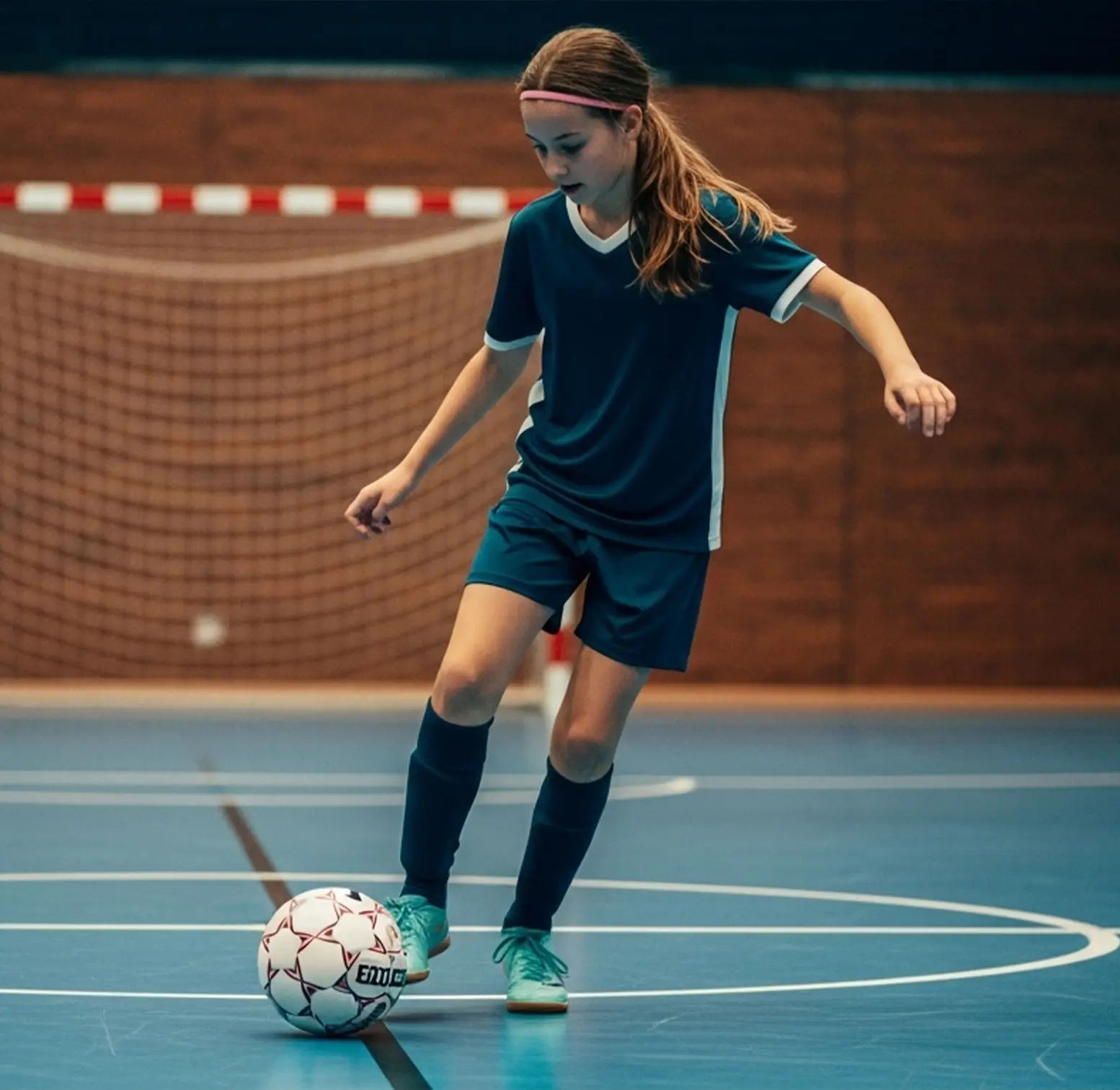
3. Sole Roll & Inside Touch Rhythm for Control
Futsal players often use the sole of the foot to stop, change direction, and protect the ball. This drill builds smooth rhythm and sharper footwork.
- Roll the ball side to side using the sole.
- Tap with the inside of each foot between rolls.
- Keep the hips low and relaxed.
- Build a steady rhythm before speeding up.
- Add small diagonals to mimic game movement.
Why it matters:
Players who master this drill gain cleaner touches and stronger balance. It trains the control of futsal demands and makes outdoor play smoother.
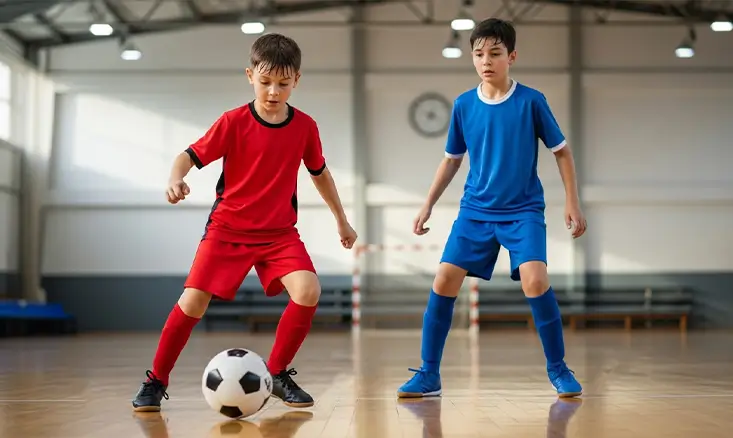
4. Quick-Reaction Wall Passing for Speed & Precision
A wall, rebounder, or firm surface turns into an excellent futsal training partner. This drill builds fast passing, sharp reactions, and clean technique.
- Press firmly with the inside of the foot.
- Recover the first touch quickly.
- Switch between the right and left foot.
- Add give-and-go movement.
- Increase tempo as accuracy improves.
Why it matters:
Players who train like this build muscle memory for tight games. They learn to pass quickly, think fast, and stay composed under pressure.
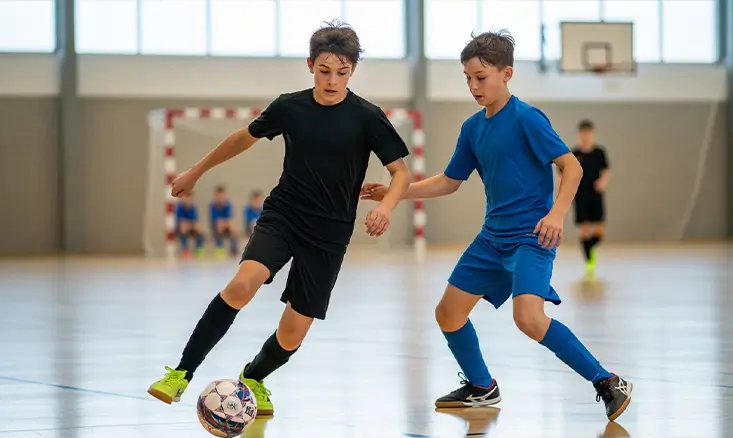
Fast Transition Sprint & Touch for Game Realism
Transitions happen constantly in futsal attack to defense and back again. This drill builds fitness, awareness, and confidence.
- Start with a quick sprint to a marked spot.
- Receive a pass or self-play off a wall
- Turn sharply and dribble into open space.
- Switch directions quickly.
- Repeat with a short rest between reps.
Why it matters:
These transitions prepare kids for game-speed moments. Players learn to move with purpose, stay balanced, and handle pressure calmly.
FAQs
How do futsal drills help my child stay sharp?
Futsal drills help your child stay sharp by increasing touches, reactions, and decision-making in tight spaces. The fast pace keeps players mentally active and physically engaged throughout winter, when outdoor training often slows. This constant involvement builds rhythm, confidence, and technical consistency. Learn more about maintaining year-round sharpness in our guide on player engagement.
Which drill is best for improving ball control?
Ball control improves most through tight-space dribbling and sole-roll drills, where players learn to stay balanced and relaxed under pressure. These movements encourage light touches, smoother rhythm, and better awareness. Practicing in small areas helps players feel more confident during real games. To explore how Charlotte Rise FC supports every player’s development, read our guide on player importance.
Can these futsal drills help with quick decision-making?
Yes. Futsal drills such as small-sided passing boxes and transition exercises challenge players to think quickly, scan early, and respond with confidence. The fast environment encourages quicker choices and sharper awareness. These skills transfer directly into outdoor play. If you would like guidance choosing drills for your child, contact our coaching staff through the Contact Us page.
Are these drills good for beginners?
Yes. These drills are excellent for beginners because they introduce simple movements, steady repetition, and lots of touches. Kids learn balance, control, and basic decision-making in a comfortable, supportive environment. This helps new players build confidence quickly. Parents who want to understand how we support each player can read our insight on player value.
Can my child practice these futsal drills at home?
Yes. Many futsal drills—such as wall passing, sole rolls, and tight control work—require very little space and can be practiced at home. Repetition between sessions helps players stay engaged and technically sharp. Parents who want to support year-round development can explore our article on keeping players sharp and engaged.
Do futsal drills help with outdoor soccer, too?
Yes. Futsal drills strengthen skills that carry directly into outdoor soccer. Players develop faster feet, cleaner touches, and better reactions because the game demands quick decisions in tight areas. This prepares them for higher-speed outdoor environments. If you want personalized recommendations for your child, you can connect with our coaches through the Contact Us page.

Did you find this useful?

LATEST BLOGS