


What Parents Should Know About Indoor vs Outdoor Summer Soccer Camps


CRFC
NEWSLETTERS
NEWSLETTERS FOR OUR LATEST EVENTS
What Parents Should Know About Indoor vs Outdoor Summer Soccer Camps
When parents look at summer soccer camp options, one question comes up fast. Should we choose indoor camp or outdoor camp? On the surface, it can sound like a simple location choice. In reality, the setting can shape how your child trains, moves, and experiences the week.
The good news is that this is not a right-or-wrong decision. Both indoor and outdoor summer soccer camps can help young players improve. The better question is what kind of environment fits your child’s age, needs, energy, and goals.

Why the training setting matters in summer
A camp setting does more than decide where the cones go. It affects pace, space, comfort, and the type of repetitions a player gets during the day.
- Indoor sessions often create tighter spaces and quicker decisions.
- Outdoor sessions usually give players more room to run and cover ground.
- Different surfaces can change how the ball moves.
- Some kids feel more comfortable in one environment than the other.
- Summer weather can also influence the training experience.
That matters because players do not all learn the same way. One child may thrive in a fast indoor rhythm. Another may feel more natural on a larger outdoor field.
What indoor summer soccer camps can help players build
Indoor training often puts players in tighter spaces where they must think and react quickly. That can make indoor camps useful for technical growth and faster decision-making.
- Players often get more close-control touches.
- Quick passing becomes more important.
- Tight spaces can sharpen awareness.
- Players must adjust faster when pressure comes.
- Sessions often stay active because the ball is rarely far away.
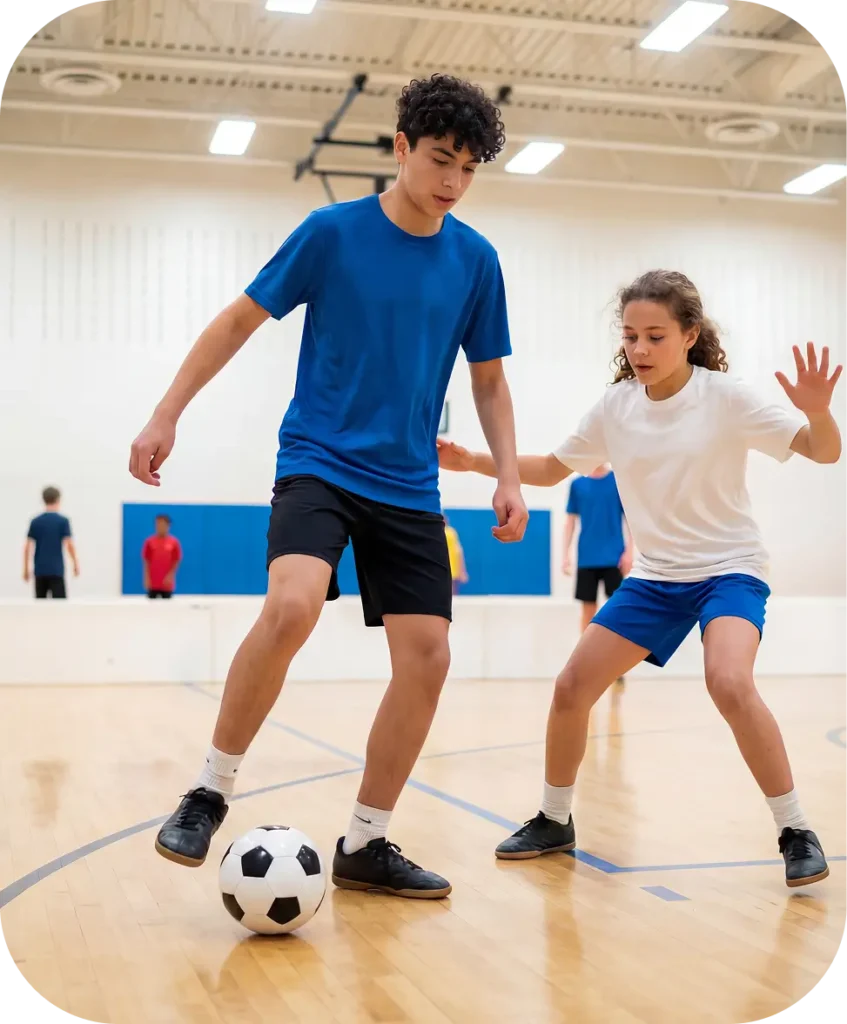
This kind of environment can be especially helpful for players who need cleaner touches, quicker reactions, and more comfort in crowded game moments.
What outdoor summer soccer camps can help players build
Outdoor camps bring a different kind of value. They give players more room to move, more chances to judge space, and more opportunities to connect technique with larger-field play.
- Players can work on passing over longer distances.
- Movement off the ball becomes easier to teach in open space.
- Players learn to read wider game situations.
- Running patterns feel closer to full match play.
- Outdoor sessions can help kids adjust to the setting used in many league games.
For players who need to build field awareness, movement, and rhythm in open play, outdoor camps can be a strong fit.

How Charlotte Rise FC gives families both options
Charlotte Rise FC gives families access to both indoor and outdoor summer camp options, which is helpful because players have different needs and learning styles. The summer camp page shows indoor camps at Rea Farms STEAM Academy and outdoor camps at Harrisburg Athletic Complex and Waxhaw Elementary.
That mix gives parents more flexibility. A player who needs tighter technical work may benefit from an indoor setting, while a player who wants more open-field movement may feel more comfortable outdoors. It also helps families choose based on location and schedule without losing sight of development.
Takeaway: Having both indoor and outdoor options gives families room to choose what fits best. That flexibility can make summer training more practical and more useful.
Conclusion
Indoor and outdoor summer soccer camps each bring something useful to the table. Indoor settings can sharpen quick decisions, tight control, and fast reactions. Outdoor settings can build movement, spacing, and comfort in open-field play.
For parents, the goal is not to chase the perfect label. It is to choose the environment that fits your child’s current needs and helps them enjoy the process while still improving. If you can do that, you are already playing on the right side of the ball.
NEWSLETTER