


Why Small-Sided Games Make Summer Soccer Camps More Effective for Youth Players


CRFC
NEWSLETTERS
NEWSLETTERS FOR OUR LATEST EVENTS
Why Small-Sided Games Make Summer Soccer Camps More Effective for Youth Players
If you have ever watched a child drift through a full-field game without touching the ball much, you already know the problem. The field is big. The space is wide. And for young players, the action can feel far away.
That is one reason small-sided games matter so much in summer soccer camps. They pull players closer to the action, give them more chances to make decisions, and turn practice into something that feels alive. Instead of standing around and waiting for the ball, kids get to be in the middle of the game more often.

Why small-sided games work so well in summer camps
Summer camps are short by nature. That means every session needs to count. Small-sided games help coaches pack more useful learning into each session without making training feel stiff or heavy.
- More touches help reinforce technical skills.
- More decisions help build soccer awareness.
- More transitions help players react faster.
- More action keeps kids focused and moving.
- More involvement makes training feel fun.
It is a bit like learning a language through conversation instead of worksheets. Kids improve faster when they keep using the skill in real situations.
Takeaway: In a camp setting, small-sided games make each minute work harder. Players are not just practicing skills. They are using them under pressure, which helps growth stick.
How Charlotte Rise FC uses this in summer camps
Charlotte Rise FC’s summer camp structure reflects why small-sided games matter. The summer camp page explains that players move through skill development in passing, shooting, and ball control, then into small-sided games where they apply new skills in game situations. The page also highlights dribbling circuits, accuracy training, team play practice, and high-energy practice games at the end of each day.
That matters because it blends technical training with decision-making. Players are not stuck in a cone maze all day. They get chances to use what they learn while the game is still moving around them.
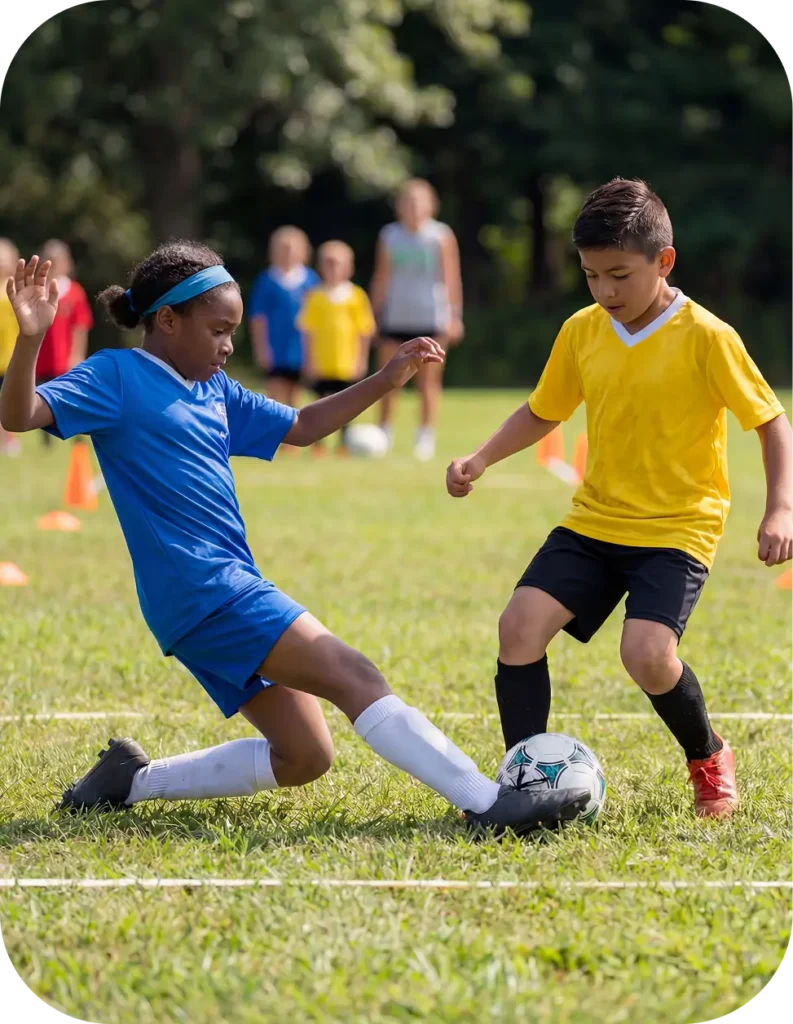
Takeaway: A summer camp becomes more effective when skills and game play work together. That is where small-sided games shine, and that is why they belong in a strong youth camp structure.
Why this matters during the summer months
Summer is a great time to build skills, but players also need training that keeps them mentally engaged. Small-sided games help camps do both. They give players repetition without boredom and challenge without overload.
- Sessions feel active from start to finish.
- Players stay connected to the ball and each other.
- Coaches can teach without stopping the flow too often.
- Camp days feel productive without feeling too serious.
- Kids are more likely to enjoy coming back the next day.
That is a big deal. When a child enjoys the process, they usually learn more. That is not magic. It is just how people work.
Conclusion
Small-sided games are not just a fun add-on in youth soccer. They are one of the best ways to help players get more touches, make quicker decisions, and stay fully involved in training. In a summer camp setting, that makes every session more useful.
For parents, the value is simple. Your child gets more chances to learn by doing, not just by watching. And when that happens, camp feels less like filler and more like progress. That is a win worth chasing, even if the post-camp laundry still looks like it played a full 90.
NEWSLETTER