


How to Know If Your Child Is Ready for Youth Soccer Tryouts


CRFC BLOGS
LATEST BLOGS & NEWSLETTERS
How to Know If Your Child Is Ready for Youth Soccer Tryouts
If your child loves soccer, works hard, and wants a bigger challenge, you may be wondering whether tryouts make sense right now. That question is common, and it is a good one. No parent wants to rush the process or throw a child into the deep end before they are ready.
At Charlotte Rise FC, the public tryouts information says the club offers free youth soccer tryouts for boys and girls from U8 to U16, with sessions that mirror real Academy training and evaluations that focus on first touch, decision-making, and work ethic. That gives parents a helpful starting point when thinking about readiness. Readiness is not only about being the top scorer or the fastest player on the field. It is also about how a child responds to coaching, handles pressure, and stays engaged throughout a full session.
The good news is that you do not need a crystal ball to make a smart decision. You can look for a few simple signs at home, in training, and on game day. Think of it like checking the weather before heading out. You do not need perfect skies. You just need enough signs to know the trip makes sense.
Your Child Shows Interest in More Challenges
Some kids enjoy playing, but they are happy staying in the same lane. Others start looking for more. They want faster games, sharper coaching, and a setting that pushes them to improve. That is often one of the clearest signs that tryouts may be a good next step.
- Your child talks about wanting to improve, not just wanting to win.
- They enjoy training and do not need to be dragged onto the field.
- They ask questions about teams, competition, or how to get better.
- They seem excited by a challenge instead of being scared off by it.
- They recover from mistakes and keep playing.
Takeaway: A child does not need to be perfect to be ready. They do need to be open to growth. If your child wants more challenges and keeps showing up with energy, that is a strong clue that tryouts may fit their next stage.

Basic Soccer Habits Are Starting to Show Up Consistently
Parents sometimes think a child must already look polished before trying out. That is not the best way to look at it. Most coaches are not searching only for highlight-reel moments. They are looking for patterns that show a child can learn and compete in a structured setting.
At Charlotte Rise FC, the public tryouts page points to first touch, decision-making, and work ethic as key evaluation points. That is useful because it tells parents what matters beyond flashy moves.
- Your child can settle the ball without panicking every time.
- They can make simple passing choices instead of forcing everything forward.
- They work back after losing the ball.
- They stay involved even when the game gets hard.
- They try to solve problems instead of shutting down.
Takeaway: Readiness often looks like repeatable habits, not one big moment. A child who shows steady soccer basics and stays engaged in play may be more ready than a player who has one great move and disappears for the rest of the game.

Coachability Matters More Than Parents Think
This is one of the biggest signs of readiness, and it often gets overlooked. A child who listens, adjusts, and tries again is much easier to develop than a child who resists every correction. Talent may open the door, but coachability helps keep it open.
Charlotte Rise FC’s coaching pages and Academy pages emphasize player development and structured coaching across age groups. That matters because tryouts are not only about whether a child can play today. They are also about whether a child can grow in the environment ahead.
- Your child listens when a coach gives a correction.
- They try to apply feedback during the same session.
- They do not melt down after one mistake.
- They can focus on the length of practice.
- They respect teammates, coaches, and the flow of training.
Emotional Readiness Counts Too
A child can have decent technical ability and still not be ready for tryouts. Why? Because the emotional side matters. Tryouts bring nerves, comparison, and pressure. That does not mean kids must be calm all the time. Butterflies are normal. It means they should be able to move through nerves without giving up.
- Your child can handle being corrected in front of others.
- They do not need constant praise to stay engaged.
- They can bounce back after a mistake.
- They stay connected to the session even when things get tough.
- They talk about learning, not just making the team.
Takeaway: A ready player is not a fearless player. They are a player who can keep going even when nerves show up. That kind of mindset helps kids get more out of tryouts and out of soccer as a whole.
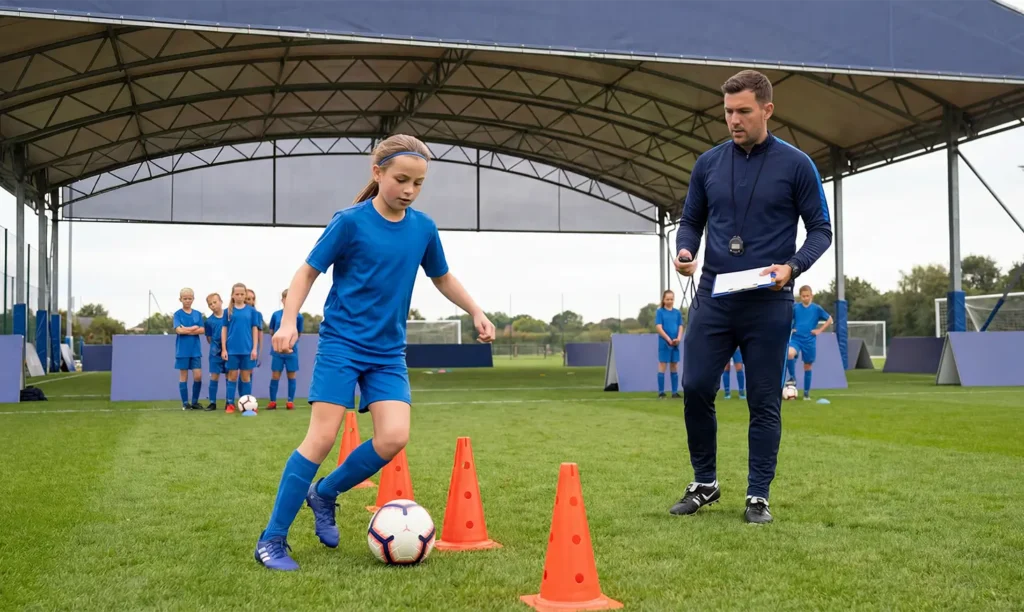
The Right Environment Matters as Much as Timing
Sometimes a child is ready, but the bigger question is whether the environment fits. That is why parents should think beyond the word “tryout” and look at what kind of setting their child may be stepping into.
Charlotte Rise FC’s public site describes the Academy program as a structured path for players from U8 to U19 and highlights professional coaching, development, and a club environment built around player growth. The club’s About Us and testimonials pages also frame the experience around confidence, growth, and family trust.
- Is your child excited by structured coaching?
- Do they want to train with players who also take the game seriously?
- Are they ready for a setting where feedback is part of progress?
- Do they enjoy learning over time, not just game-day excitement?
- Are you looking for a better development fit, not just a new jersey?

How Parents Can Make the Call Without Adding Pressure
This is where many families get stuck. They do not want to hold a child back, but they also do not want to push too soon. The best move is usually the simple one: observe, ask, and keep the pressure low.
- Watch how your child responds in training, not just in games.
- Ask what they want more from soccer right now.
- Notice whether they light up when the level gets harder.
- Focus on signs of growth, not only goals or wins.
- Treat tryouts as a learning step, not a final judgment.
If you are looking at Charlotte Rise FC specifically, the public tryouts page shows free tryouts at Ballantyne Ridge High School for boys and girls from U8 to U16, with online registration required. That can make the decision easier for families because it allows players to experience the setting without a fee barrier.
Takeaway: The best tryout decisions usually come from calm observation, not panic. You are not trying to predict your child’s whole soccer future. You are simply deciding whether this next step makes sense right now.
Conclusion
Knowing whether your child is ready for youth soccer tryouts does not have to feel like solving a puzzle with half the pieces missing. Look for interest, steady habits, coachability, and emotional readiness. Then match those signs to the kind of environment your child may be entering.
For families exploring Charlotte Rise FC, the public tryouts page gives a clear picture of the current process, age groups, and what coaches evaluate. If your child wants more challenges and seems ready to learn in a structured setting, tryouts may be a smart next step. Sometimes the best way to know is to stop standing on the sidelines of the question and let your child step onto the field.
Frequently Asked Questions
How can I tell if my child is ready for youth soccer tryouts?
A child may be ready for youth soccer tryouts when they want more challenge, respond well to coaching, and keep working after mistakes. Readiness usually shows up in habits, effort, and mindset, not only in goals or flashy plays. For families exploring that next step, Charlotte Rise FC tryouts can feel like a natural extension of that growth.
Does my child need to be one of the best players on the team before trying out?
No. A child does not need to be the best player on their current team to be ready for tryouts. In many cases, coaches value learning ability, consistency, and attitude just as much as standout moments. A player who is ready for a more structured environment may fit well into the pathway of Academy Teams.
What skills matter most when deciding if a child is ready for tryouts?
Basic habits matter more than perfection. A player who can stay engaged, make simple decisions, and keep improving often shows stronger readiness than a player who only shines in bursts. Those same qualities play a big role in youth soccer player development, especially over time.
Is emotional readiness just as important as soccer ability?
Yes. A child can have solid ability and still struggle if they cannot handle nerves, feedback, or mistakes. Emotional readiness means they can stay involved, listen, and keep going even when the session feels hard. That is why confidence and learning habits are such a big part of growth mindset building in young players.
How can parents support readiness without adding pressure?
The best support usually comes from calm observation and simple conversations. Instead of asking whether your child will make the team, ask whether they want more challenge and whether they enjoy learning through coaching. That kind of steady encouragement is a big part of how to support your child in soccer.
What if my child is interested in tryouts but still gets nervous?
That is normal. Nerves do not automatically mean a child is not ready. Many young players feel anxious before new challenges, but the bigger question is whether they can keep trying, listening, and competing while those nerves are there. That is also why match day nerves tips can help families frame nerves in a healthier way.
Why does coachability matter so much when deciding if a child is ready?
Coachability matters because it shows whether a child can grow in a structured setting. A player who listens, applies feedback, and keeps trying after corrections often has a better long-term ceiling than one who resists guidance. That is one reason the traits discussed in what makes a good youth soccer coach matter so much in the player environment, too.

Did you find this useful?

LATEST BLOGS