


Why Futsal Helps Growing Players Build True Balance and Stability

CRFC BLOGS
LATEST BLOGS & NEWSLETTERS
Why Futsal Helps Growing Players Build True Balance and Stability
As kids grow, their bodies change fast. Height, strength, coordination, and balance can shift from month to month, sometimes even week to week. These changes can make movement feel awkward or inconsistent for young athletes.
Futsal provides an ideal environment to help players regain control during these growth phases. Its fast pace, small court, and close ball control naturally train balance, stability, and body awareness from the ground up. Over time, players feel more centered, more confident, and more in control of every movement they make on the field.
Why Futsal Naturally Improves Balance
Constant Movement Builds Control
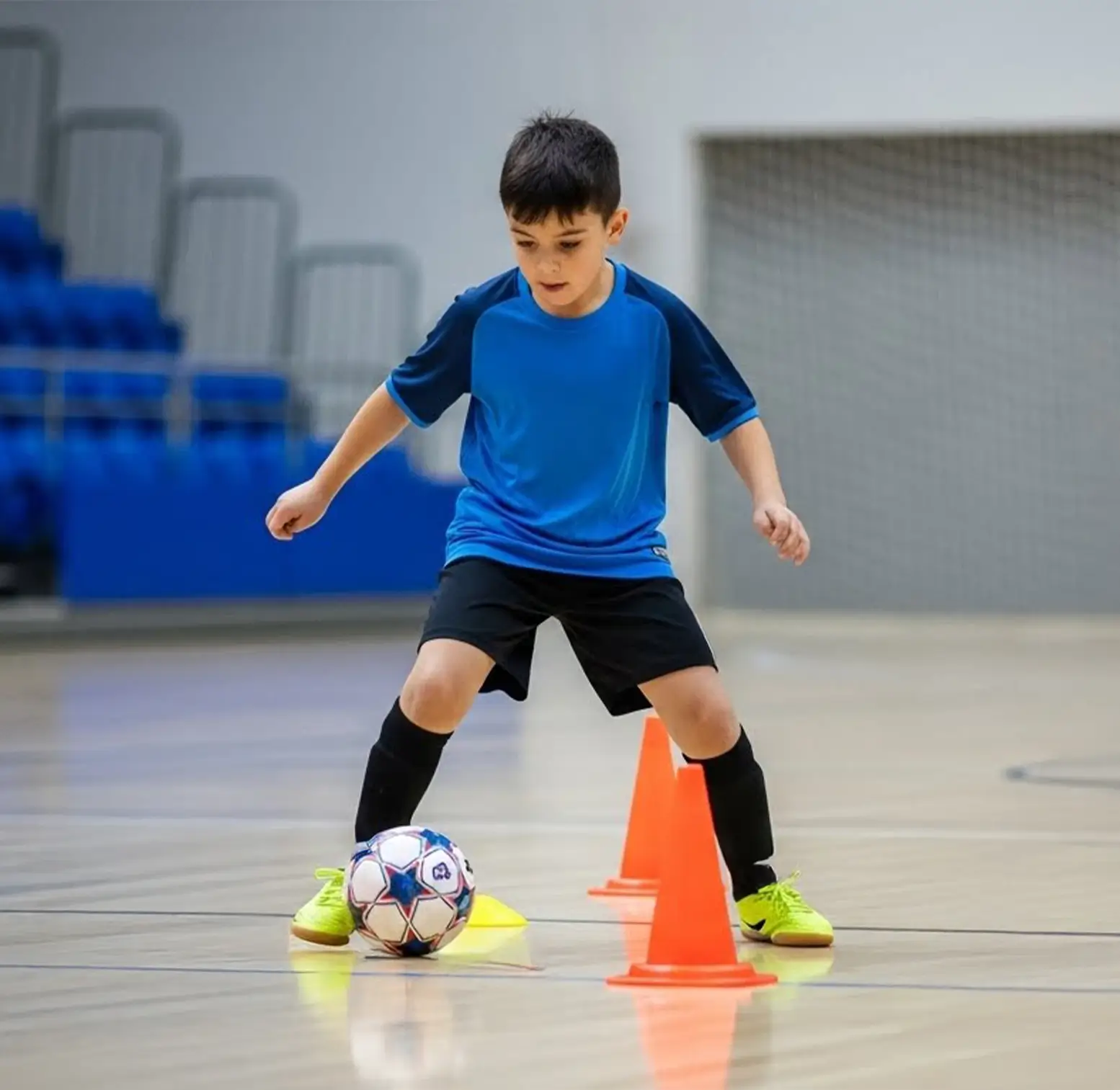
Futsal keeps players moving the entire session. There is very little standing still. Quick steps, shortcuts, and tight turns require kids to constantly adjust their body position, which strengthens balance naturally.
- Players stay active every minute.
- Small steps build strong lower-body control.
- Short movements improve coordination.
- Quick changes help kids stay grounded.
- Repeated actions strengthen core stability.
Futsal helps kids learn how to control their bodies in motion.
How Futsal Strengthens the Lower Body
Footwork That Supports Stability
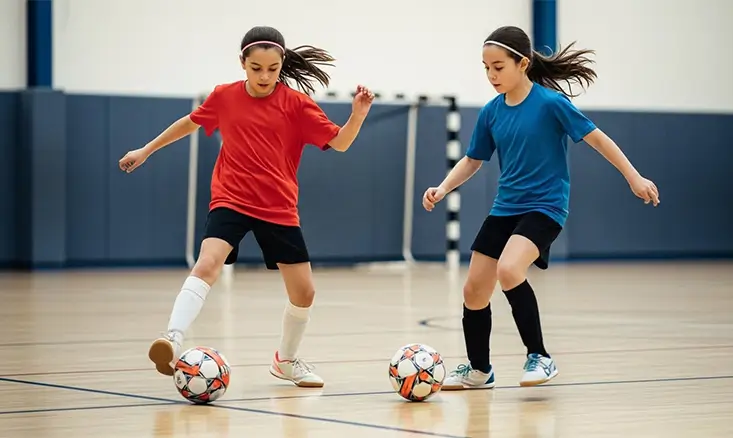
Every futsal session demands precise footwork. Players must react quickly, protect the ball, pivot under pressure, and shift their weight smoothly. These actions strengthen the muscles that support balance, especially in the legs, ankles, and hips.
- Fast reactions strengthen muscles.
- Constant contact improves foot awareness.
- Pivoting builds hip stability.
- Hard surfaces make movements clearer.
- Controlled steps strengthen the ankles.
Futsal helps young players develop stronger, more stable legs.
Why the Indoor Surface Helps Players Stay Balanced
A Predictable Playing Surface
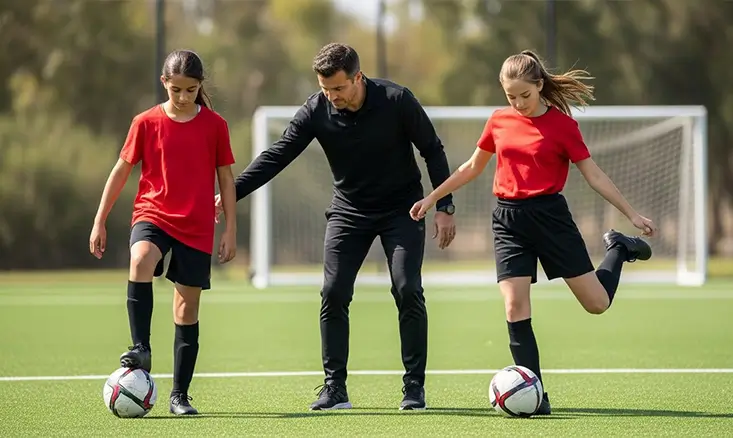
Futsal courts are flat, smooth, and predictable. This helps kids understand how the ball and their body move together without worrying about uneven ground.
- The ball stays close to the feet.
- Movement feels consistent across the court.
- Players stay balanced during quick turns.
- Kids learn to control their center of gravity.
- Less slipping helps maintain stability.
Futsal helps players move with confidence because the court never changes.
How Small-Sided Play Creates Better Body Control
More Touches, More Balance Training
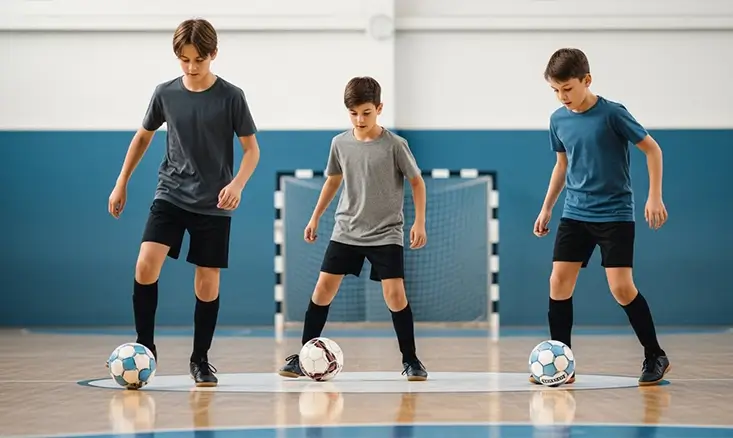
Futsal is played in small groups, which means more touches and more involvement for every player. Each touch challenges balance, posture, and coordination, especially in tight spaces.
- Players control the ball under pressure.
- Quick touches build balance in tight spaces.
- Kids learn to adjust their stance constantly.
- Frequent passing builds stable movement.
- Continuous involvement increases body awareness.
Small-sided play makes every movement a balance exercise.
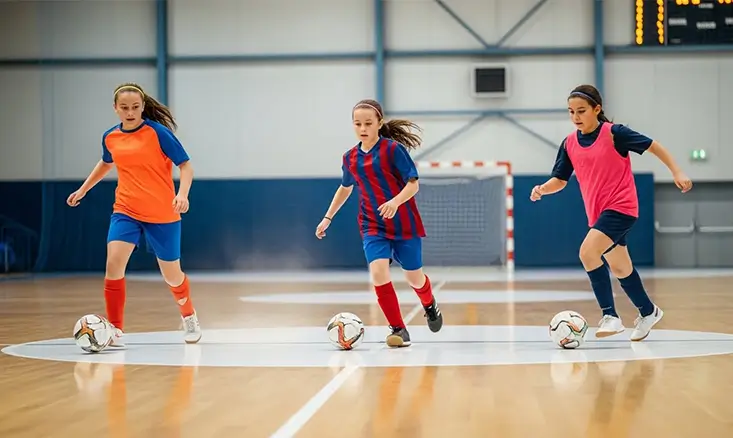
Why Balance Matters for Growing Players
Better Movement Supports Long-Term Development
Good balance allows players to move efficiently, react quickly, and protect their bodies as they grow. During growth spurts, stability becomes even more important for injury prevention and confidence.
- Players move with more control.
- Stability reduces awkward falls.
- Strong balance prevents injuries.
- Running mechanics improve.
- Kids become more confident in all movements.
Balance and stability help shape athletes who feel comfortable and capable on the field.
Conclusion
Futsal is one of the best environments for building balance and stability in young soccer players. The small court, fast pace, and constant contact with the ball help kids strengthen coordination, control, and confidence. As players grow, these qualities become essential to their long-term development.
Charlotte Rise FC uses futsal to help players build a strong, stable foundation they can rely on in every season.
FAQs
1. How does futsal help young players improve balance?
Futsal keeps players moving through quick steps, sharp turns, and constant ball control. These repeated actions strengthen the legs and core, which improves overall balance. The steady growth seen in youth soccer skill development shows how consistent movement patterns help players build strong coordination.
2. Why is the indoor court good for stability training?
Indoor futsal courts offer a smooth, even surface that helps players learn stable foot placement and clean body control. Without bumps or uneven ground, players can focus on movement and balance. This aligns with the improvements shown in first-touch futsal training, where controlled surfaces support better mechanics.
3. Can futsal help players who struggle with coordination?
Yes. Futsal encourages players to move in small, controlled steps and react quickly. This helps kids develop better coordination, especially during growth spurts. Similar progress appears in programs built around youth soccer training success, where repetition supports smoother movement.
4. Does balance training in futsal help outdoor soccer performance?
Absolutely. Strong balance from futsal translates directly to outdoor soccer through better stability, cleaner touches, and quicker reactions. These improvements mirror the benefits described in youth soccer development, where technical control boosts performance in all environments.
5. Is futsal good for preventing injuries in young players?
Yes. Futsal strengthens muscles around the ankles, knees, and hips, which helps protect growing players from injuries. Better balance also reduces awkward falls. This long-term benefit matches insights gained through youth soccer conditioning, where controlled exercises support safer movement.
6. Do younger beginners benefit from futsal balance training?
Younger beginners often show the fastest improvement because futsal gives them constant touches and steady movement. This helps them build balance early in their development. The same early-growth pattern appears in beginner soccer camps, where simple repetition builds a strong foundation.

Did you find this useful?

LATEST BLOGS