


Choosing the Right Age Group & Skill Level for Futsal

CRFC BLOGS
LATEST BLOGS & NEWSLETTERS
Choosing the Right Age Group & Skill Level for Futsal
Futsal gives kids a fast, exciting way to build confidence, footwork, and game intelligence. But many parents feel unsure about which age group or skill level is the best match. Choosing the right division helps your child feel comfortable, supported, and able to grow with confidence.
This guide breaks down each age range and explains what parents can expect. You’ll learn how futsal groups progress, how to evaluate your child’s readiness, and how to choose the environment that helps them thrive.
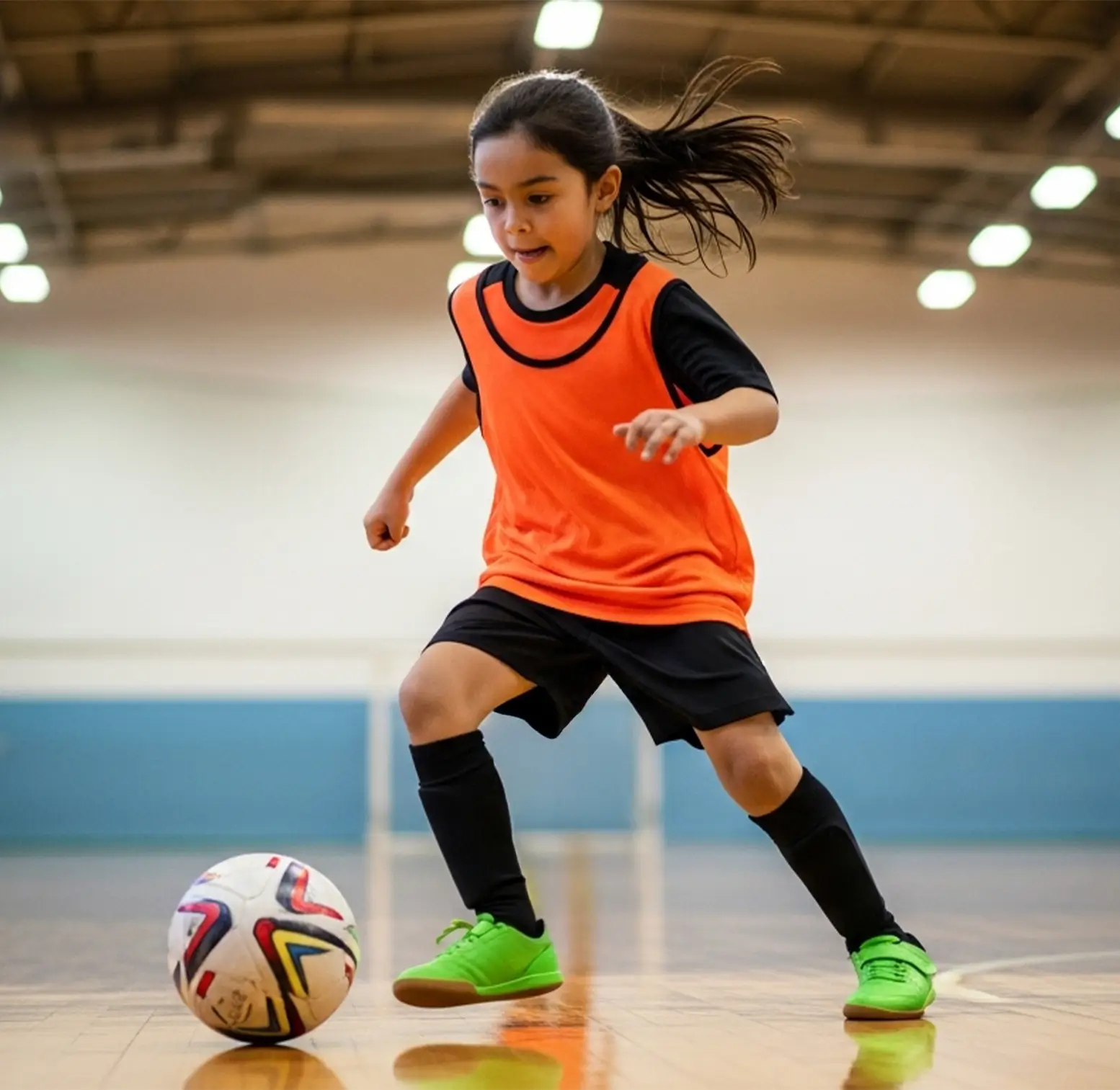
U5–U7: Building Comfort, Confidence, and Basic Control
Players in this stage are learning how to move with balance and interact with the ball. Futsal offers an encouraging environment with tons of touches, simple decisions, and fun activities that keep kids engaged and smiling.
- Light dribbling and ball-control games build coordination.
- Kids learn simple passing in small spaces.
- They understand how to move with teammates.
- Sessions remain playful and movement-based.
- Confidence grows as each child feels involved.
Kids in this range learn best with encouragement and repetition. They feel successful when the game stays simple, engaging, and full of touches.
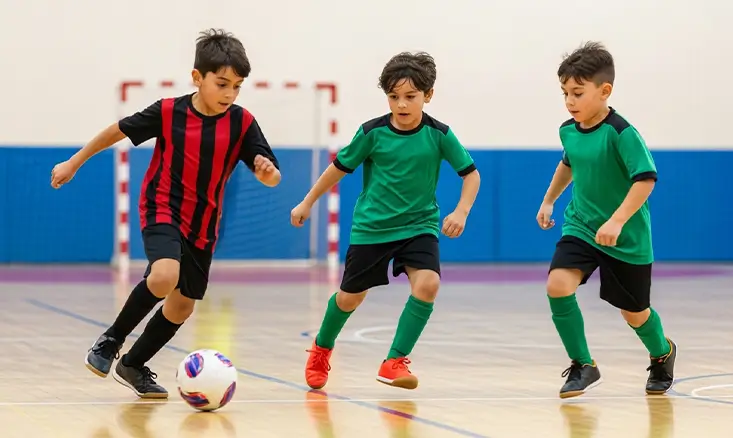
U8–U10: Growing Footwork, Awareness, and Early Decision-Making
These players are ready for more structure and faster play. Futsal helps them develop body control, scanning habits, and more purposeful passing as the game speeds up.
- Players learn to use both feet confidently.
- They develop early scanning and awareness skills.
- Quick combinations strengthen teamwork.
- Controlled pressure teaches smarter touches.
- Movement off the ball becomes more intentional.
Players begin to understand the “why” behind each action. They make faster decisions and feel more confident in tight spaces.
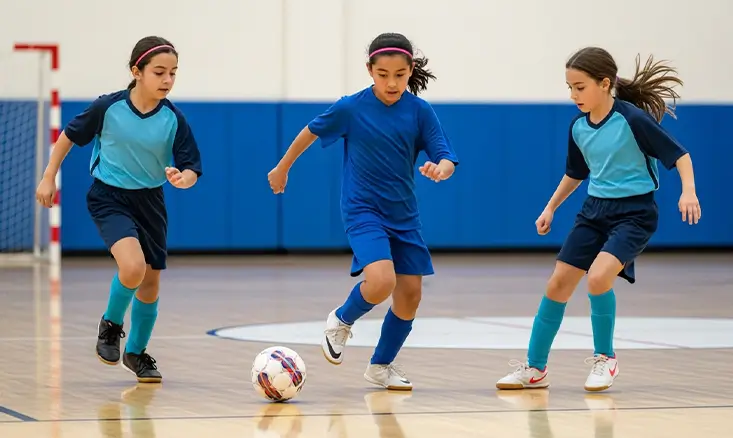
U11–U12: Sharpening Technique, Movement, and Match Awareness
At this stage, players prepare for stronger competition. Futsal offers the perfect mix of speed, pressure, and decision-making moments. Players begin anticipating plays earlier and adjusting their movement with more maturity.
- Clean touches become essential during fast play.
- Players respond earlier to defensive pressure.
- Passing patterns grow more sophisticated.
- Small-sided games teach quick transitions.
- Movement becomes more structured and strategic.
Kids begin connecting their technique with real match situations. They develop habits that transfer directly to outdoor soccer.
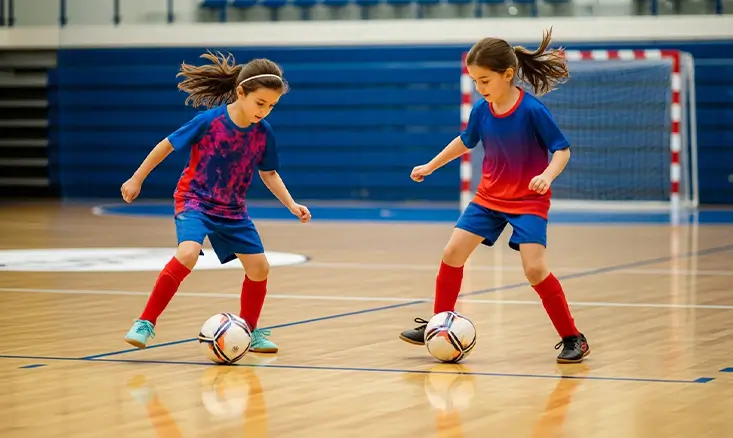
U13–U14: Mastering Speed, Pressure, and Tactical Intelligence
Older players thrive in futsal because the game challenges their tactical thinking. Quick transitions, fast decision-making, and increased pressure create a challenging, growth-focused environment.
- Players scan constantly to recognize key moments.
- Quick transitions teach advanced awareness.
- Passing becomes faster and more purposeful.
- Defending relies on timing rather than speed alone.
- Creativity increases through tight-space problem-solving.
These players benefit from faster games and higher demands. Futsal sharpens tactical intelligence and prepares them for more competitive outdoor environments.
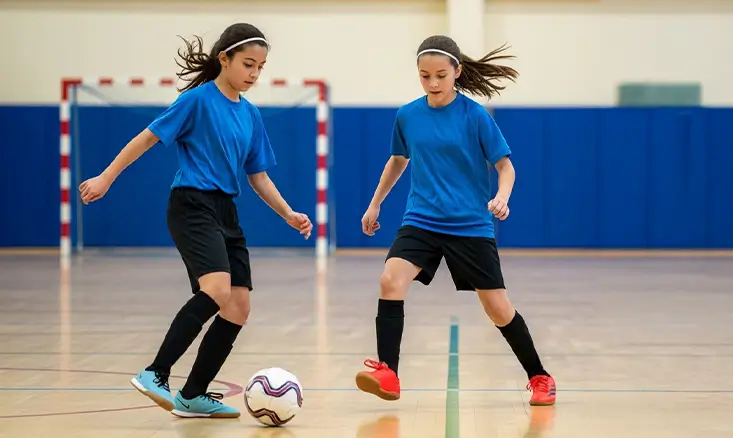
How to Pick the Best Fit for Your Child
Choosing the right group depends on comfort, confidence, and overall readiness. The goal is to place your child where they can grow without feeling overwhelmed.
- Notice how your child handles pressure and tight spaces.
- Look for age groups where they stay active and engaged.
- Aim for environments where they feel encouraged.
- Consider their personality, confidence, and learning style.
- Ask coaches for honest guidance when unsure.
Kids improve fastest when placed in the right environment. The best fit allows your child to feel supported, challenged, and excited to learn.
Conclusion
Choosing the right futsal group helps your child grow with confidence. Each age level offers unique opportunities to build footwork, awareness, movement, and game intelligence. When kids feel comfortable and supported, they learn faster and enjoy the game more.
If you want your child to develop quickly and confidently, placing them in the right futsal environment is one of the best decisions you can make.
FAQs
How do I know which futsal age group fits my child best?
Choose the group where your child feels confident, stays engaged, and can learn without feeling overwhelmed. Coaches often observe movement, comfort in tight spaces, and decision-making to recommend the right placement. Parents wanting to understand how to keep their child sharp throughout the year can explore our guide on player engagement.
Should beginners start in a lower skill group?
Yes. Beginners benefit from a calmer pace, simple decisions, and steady repetition. They need time to learn balance, control, and awareness. Starting in a supportive group builds confidence quickly. To see how Charlotte Rise FC values each child’s experience, read our article about player importance.
Can my child move up a group if they improve quickly?
Absolutely. Coaches often move players as they grow more confident, coordinated, and aware. Moving up helps children stay challenged without feeling pressure. When parents want personalized guidance or have questions about timing, they can contact our coaching team through the Contact Us page.
What if my child is older but new to futsal?
Older beginners can still thrive in futsal because the environment encourages smart movement, quick touches, and adaptable learning. Coaches help new players build confidence at their own pace. Parents can read more about how we support each child’s development in our article on player value.
Does the right futsal group help outdoor soccer development?
Yes. Proper placement helps players build the awareness, footwork, and confidence needed for outdoor games. Kids learn to move smarter, think faster, and understand spacing more clearly. To explore how staying engaged supports long-term growth, visit our guide on player sharpness and engagement.
Can the coaches help me choose the right division?
Yes. Coaches evaluate comfort, confidence, movement, and decision-making to help you choose the best group. Their insight ensures your child enters a division where they feel supported and ready to grow. For personalized suggestions, reach out through the Contact Us page.

Did you find this useful?

LATEST BLOGS