


6 Best Soccer Footwork Ladder Drills to Improve On-Field Agility

CRFC BLOGS
LATEST BLOGS & NEWSLETTERS
6 Best Soccer Footwork Ladder Drills to Improve On-Field Agility
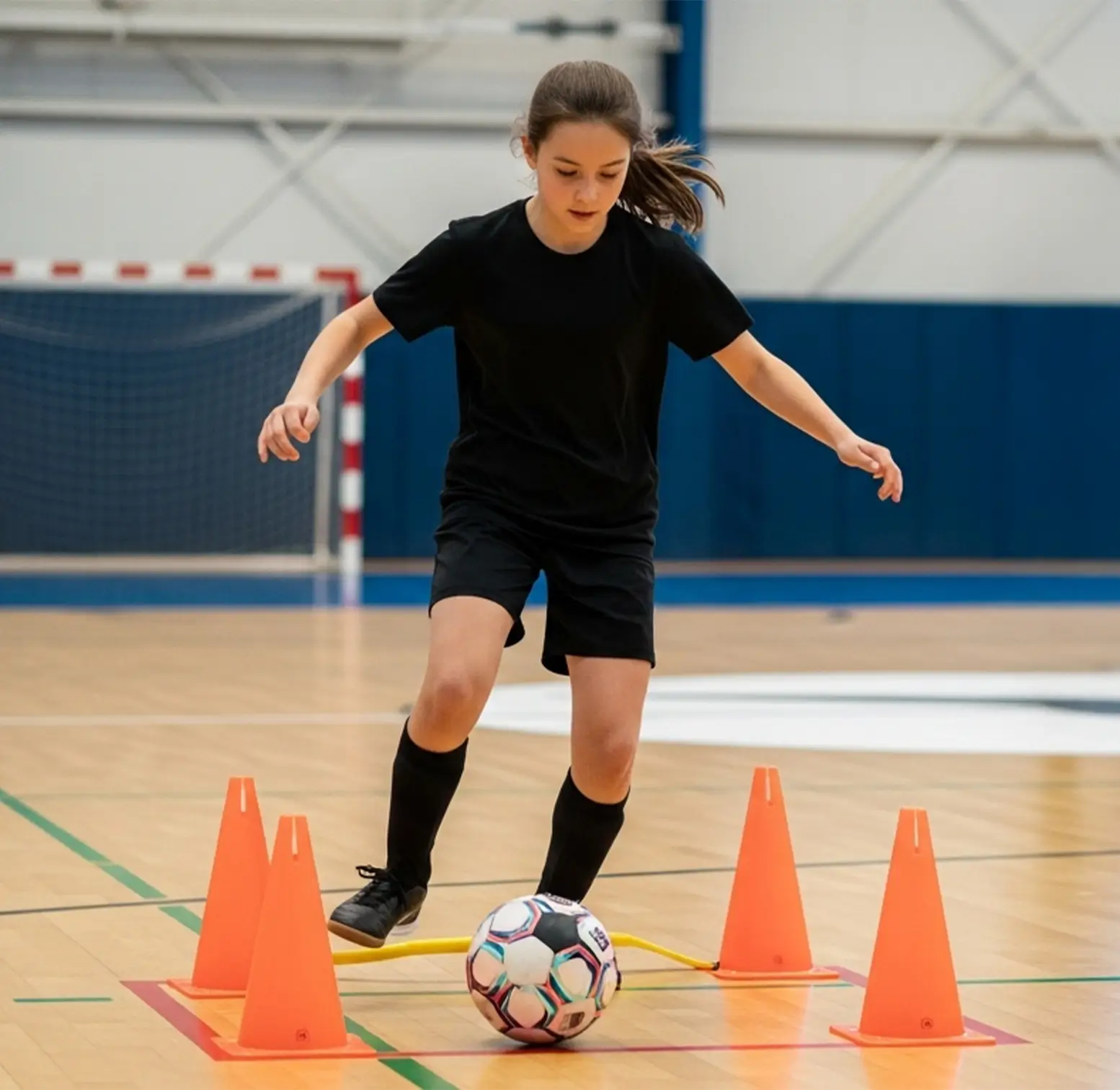
At Charlotte Rise FC, every player, no matter their age, learns that agility isn’t just about speed; it’s about control, rhythm, and awareness. Footwork ladder drills are one of the best ways to build these traits early.
Futsal, Rising Stars, and Academy players all use ladder work to sharpen movement, balance, and decision-making. These six beginner-friendly ladder drills fit right into Rise FC’s philosophy: developing smarter movers, not just faster runners.
1. One-In, One-Out Drill
The One-In, One-Out drill forms the foundation of every agility program at Charlotte Rise FC. It helps players find rhythm between both feet and teaches coordination under control.
How to do it:
- Step one foot in the ladder square, then the other.
- Step one foot out, then follow with the next.
- Keep light, controlled steps, don’t rush early reps.
- Once timing feels smooth, build tempo gradually.
Young players in our Rising Stars program use this drill to build coordination before adding a soccer ball for extra challenge.
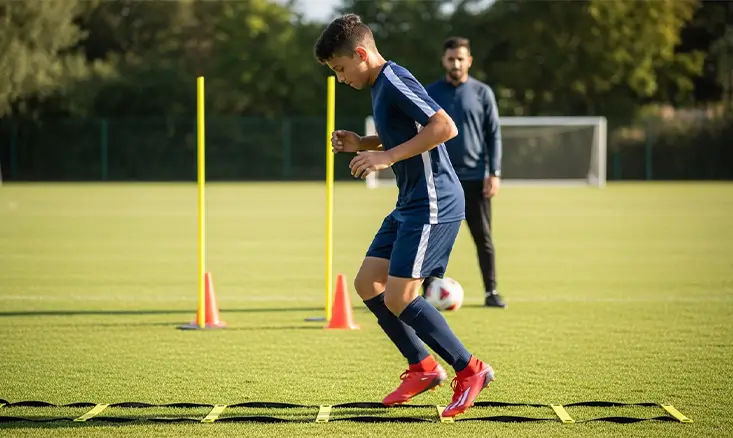
2. Two-In, Two-Out Drill
As players grow stronger, this ladder progression adds power and balance. It improves quick starts, acceleration, and recovery, vital for defensive positioning.
How to do it:
- Start with both feet outside the ladder.
- Step both in, then both out.
- Stay low, maintain core tension, and move fluidly.
- Repeat through the ladder, then increase speed.
This pattern teaches the body to stay compact and powerful, skills that transfer directly to pressing and recovery runs in matches.
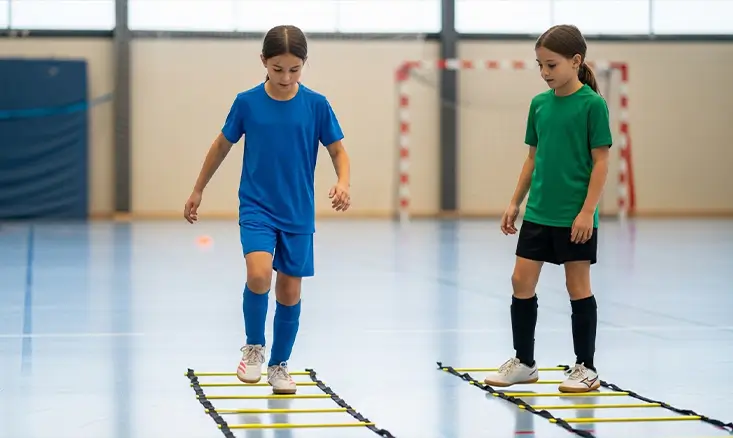
3. Lateral Quick Steps
Soccer demands constant direction changes. The Lateral Quick Steps drill builds agility for side shuffles, defensive tracking, and short sprints to regain position.
How to do it:
- Stand sideways at the start of the ladder.
- Step in with the lead foot, then bring the trail foot inside.
- Step both feet out, then repeat moving laterally.
- Keep hips facing forward and avoid crossing feet.
In Charlotte Rise FC Academy sessions, this movement pattern is paired with defensive drills to help players react faster when marking opponents.
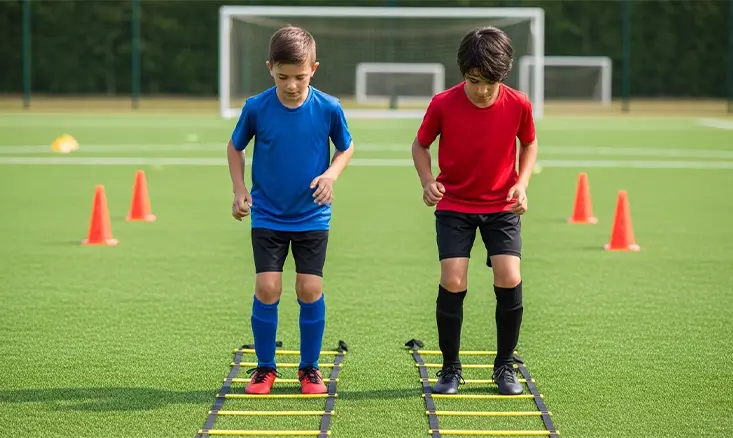
4. Ickey Shuffle
This drill blends rhythm, quickness, and coordination—making it a favorite in both futsal and field training. The Ickey Shuffle sharpens reaction time and body control under game-like stress.
How to do it:
- Step one foot into the square, then the other.
- Step out to the side with the lead foot.
- Bring the trail foot into the next square and continue.
- Keep the rhythm smooth and bouncy.
The Ickey Shuffle helps Rise FC players learn fluid transitions, moving seamlessly between attacking and defending moments in tight spaces.
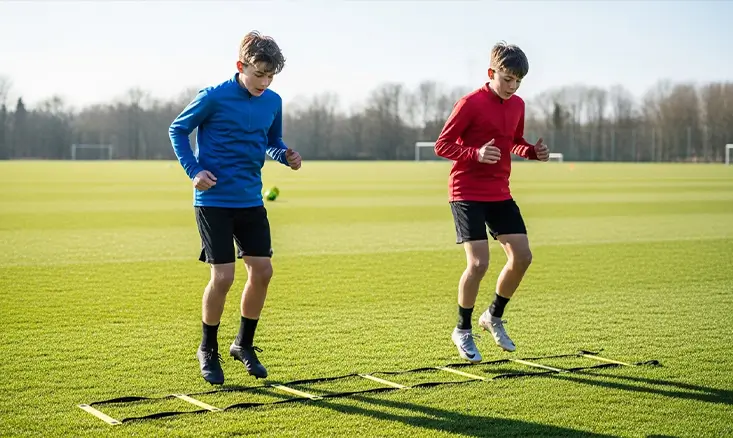
5. In-and-Out Forward Hops
This explosive drill builds ankle strength and stability—essential for sprinting, jumping, and quick redirections.
How to do it:
- Start with both feet together inside the ladder.
- Hop forward one square at a time.
- Land softly and keep your knees slightly bent.
- Focus on light, controlled takeoffs.
In our soccer injury prevention sessions, this drill supports ankle health while improving landing mechanics, helping players stay strong throughout the season.
6. Two-In, One-Out with Direction Change
This is one of the most advanced ladder drills at Charlotte Rise FC because it challenges rhythm, awareness, and agility all at once.
How to do it:
- Step two feet into one square, one foot out diagonally.
- Continue down the ladder while maintaining flow.
- At the halfway point, reverse direction smoothly.
This progression teaches players to pivot sharply while maintaining control—just like reacting to a sudden change in play during real matches.
Why Footwork Ladder Drills Are Core to Rise FC Training
At Charlotte Rise FC, we integrate agility ladder work into nearly every training cycle. It’s not just a warm-up; it’s where players learn rhythm, balance, and composure that influence every touch on the ball.
Combining ladder drills with dribbling exercises and passing progressions develops complete players who move efficiently, think fast, and stay confident under pressure.
When movement becomes instinct, creativity follows—and that’s where the Rise FC difference shows on the field.
FAQs
Why does Charlotte Rise FC use agility ladders in training?
Ladder work helps players build body control, rhythm, and decision-making—all core to our development model. At Charlotte Rise FC, we use them to strengthen both movement and mindset, ensuring every player learns to move efficiently before speeding up. This approach aligns perfectly with our youth soccer player development goals.
How often do Rise FC players train with agility ladders?
Most players perform ladder drills two to three times a week within regular sessions. They’re integrated into warm-ups, technical work, and conditioning. Following our Youth Soccer Training Success framework ensures that players progress from rhythm to precision safely and effectively.
Do ladder drills improve dribbling and ball control?
Absolutely. Ladder drills improve coordination and timing, which are key for clean touches on the ball. At Charlotte Rise FC, players combine ladders with dribbling drills to connect movement and touch. As rhythm improves, so does confidence when attacking in tight spaces.
Can beginners start agility ladder training right away?
Yes. Ladder drills are perfect for beginners—they teach foot placement and body balance without requiring advanced skills. Our Rising Stars sessions introduce ladders early, allowing kids to develop coordination and confidence before moving into higher-speed patterns.
How does ladder training prevent injuries?
Strong footwork reduces risk. Ladder drills improve balance, coordination, and landing technique, helping players recover safely from quick cuts and jumps. These principles mirror our soccer injury prevention program, which keeps young athletes active and healthy all season.
How can parents help kids practice at home?
Parents can set up a simple rope or tape ladder at home for practice 2–3 times per week. Encourage short, focused sessions that emphasize control over speed. To pair footwork with ball mastery, explore our youth coach guide of ball control for fun, at-home routines used by Rise FC coaches.

Did you find this useful?

LATEST BLOGS